Clinic Management Platform
One system to run a dental clinic end to end — records, imaging, scheduling and CRM — deployed across six countries.
How this started
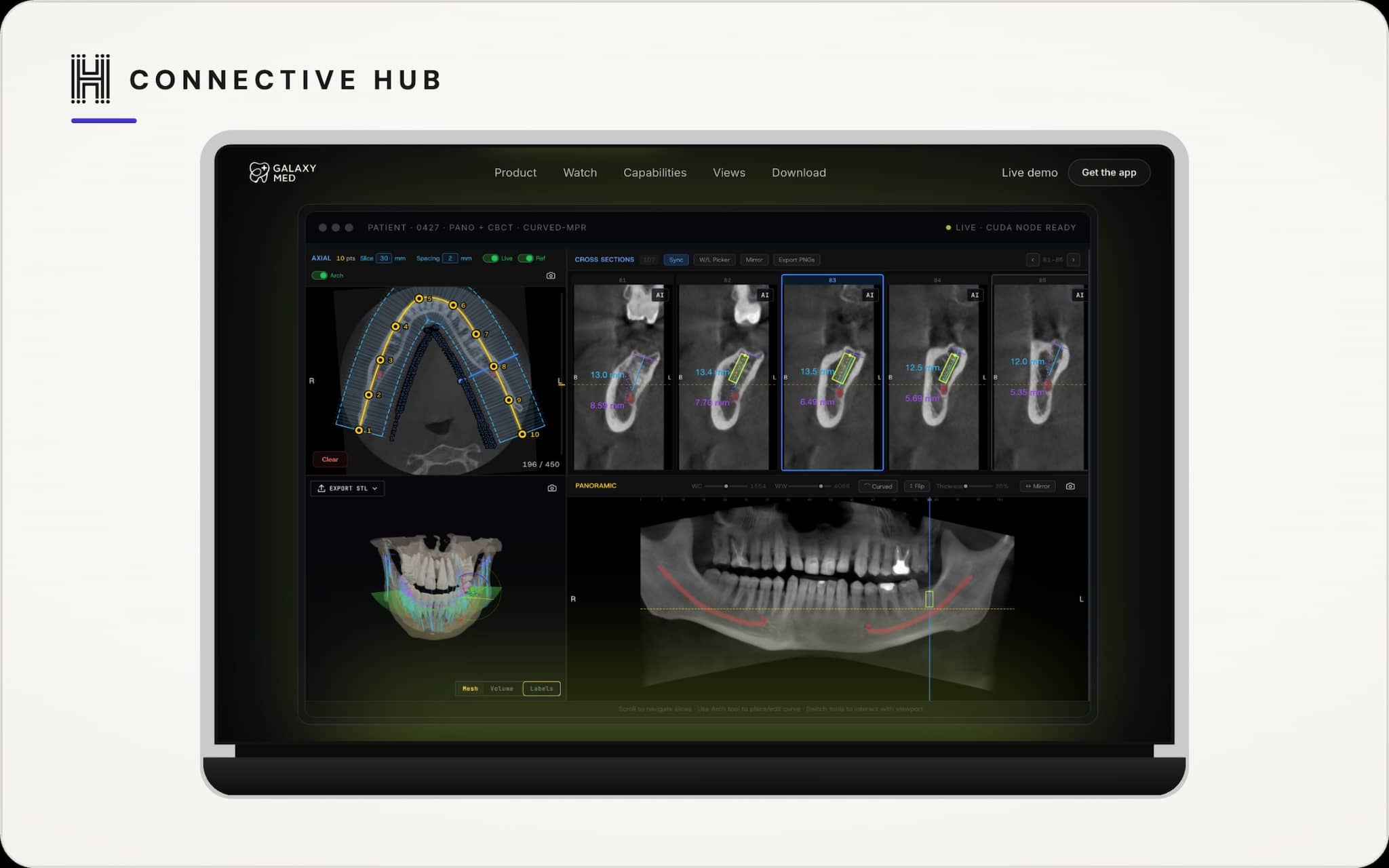
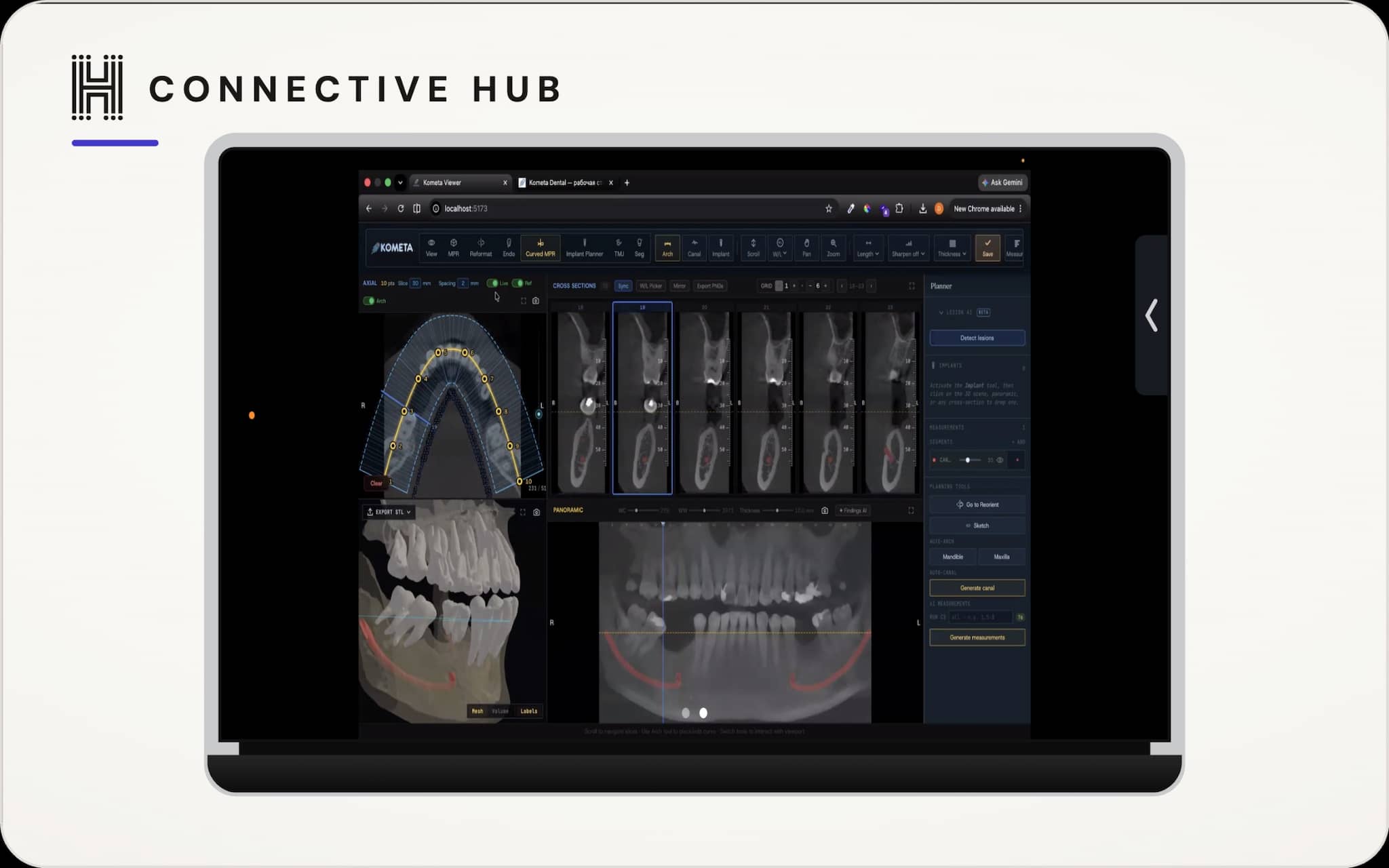
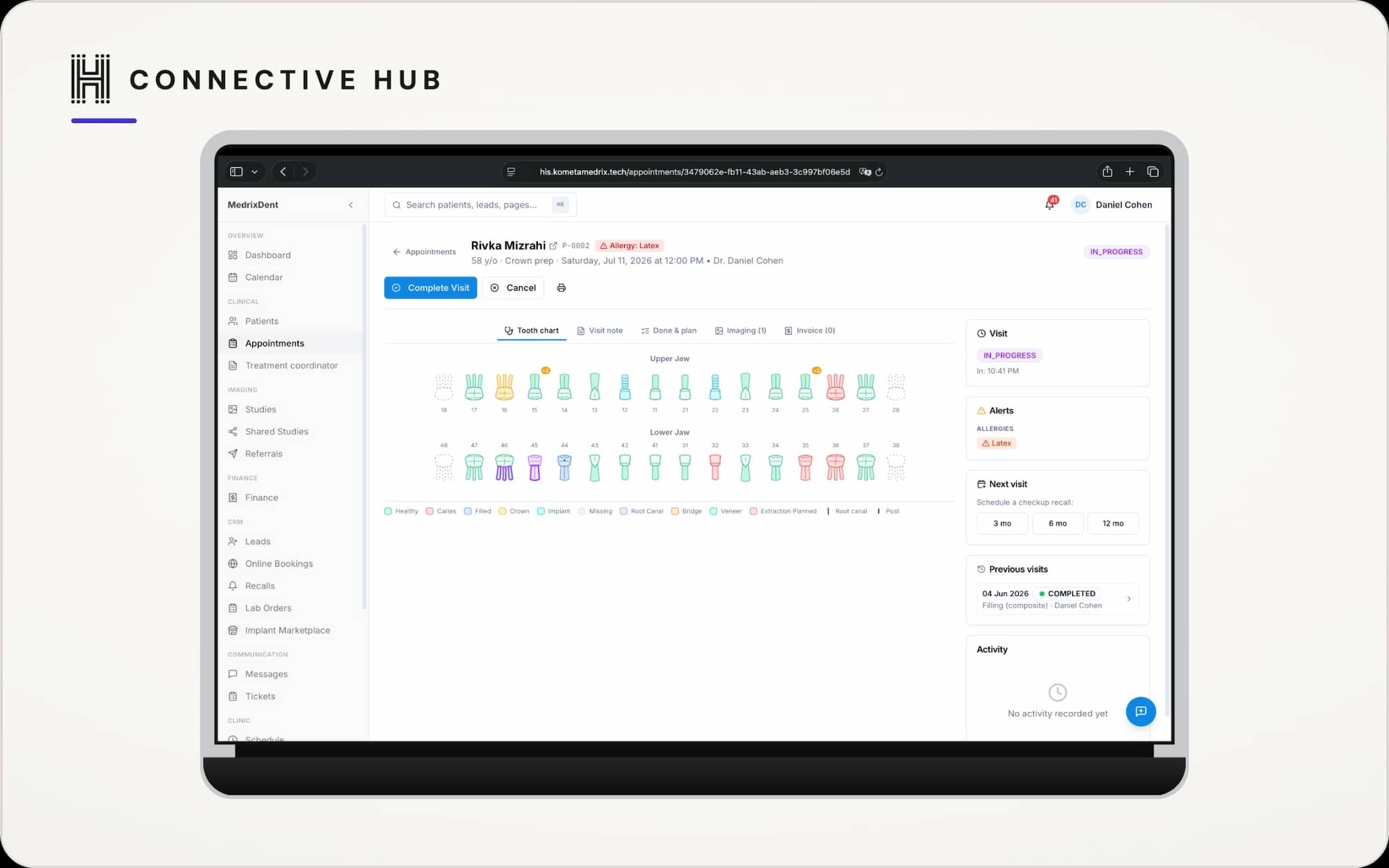
A complete operating system for dental clinics, built as one integrated product: a Health Information System, a Study Browser for imaging, a Booking system, a CRM, and a built-in DICOM Viewer — the pieces a clinic normally stitches together from five vendors, designed to work as one.
Challenge
Clinics run on fragments: one tool for records, another for images, a third for scheduling, a spreadsheet for the rest. Nothing talks to anything, and every handoff is a place to lose data — or a patient. The goal was a single system where a booking, a record, an image and a follow-up are the same continuous thread.
Approach
We built HIS, Study Browser, Booking and CRM around a shared core, with the DICOM Viewer embedded so clinicians read images without leaving the record. Deployed across six countries, it's built for multi-site, multi-language and local workflow differences from the ground up.
The hard decision
We could have integrated five best-of-breed products and sold the glue between them. Instead we built the pieces on one shared core. It's more to own and more to maintain — but it's the only way a booking, a record and an image genuinely become one thing, rather than three systems politely pretending to cooperate.
One system where clinics usually run five
A typical clinic stitches its day together from separate tools: one for records, another for images, a third for scheduling, a spreadsheet for the rest. Nothing talks to anything, and every handoff between them is a place to lose data — or a patient. We built the opposite: a single platform where a booking, a record, an image and a follow-up are the same continuous thread.
Five products share one core:
- Health Information System — the patient record at the centre of everything.
- Study Browser — imaging, organised and searchable.
- Booking — scheduling the front desk and clinicians share.
- CRM — the relationship and follow-up layer.
- DICOM Viewer — embedded, so clinicians read images without leaving the record.
Built multi-country from day one
It runs across six countries, so multi-site, multi-language and local workflow differences weren't a later retrofit — they're in the foundation. Adding a clinic or a country is configuration, not a fork of the codebase.
The point
Imaging lives inside the patient record. No exporting, no second app, no context lost between the scan and the note.
Before / After
Before
5 separate
After
1 platform
Tools to run a visit
Before
Exported
After
Embedded
Imaging in the record
Before
New install
After
Configuration
New site setup
The Impact
Quantitative
Qualitative
Replaces a stack of disconnected tools with one continuous system.
Imaging lives inside the patient record — no context-switching.
Built multi-site and multi-country from day one.
Our team stopped switching between programs. The scan, the history and the next appointment are finally in one place.
Medical group (multi-country) · Clinic operations lead
Team
Stack