AI Analytics for Dentistry
AI that turns dental scans into structure clinicians can act on — automatic segmentation and cephalometric landmarks.
How this started
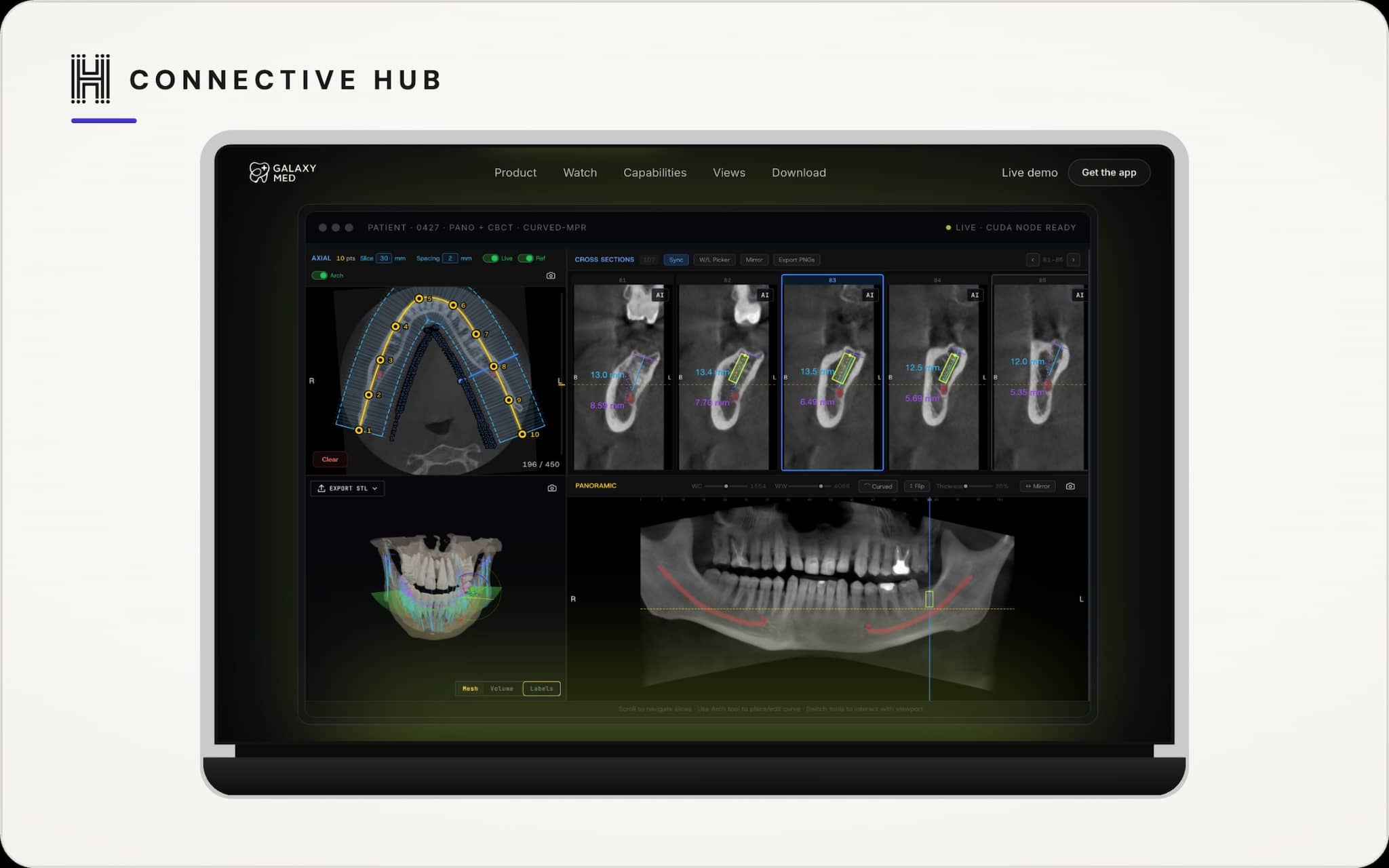
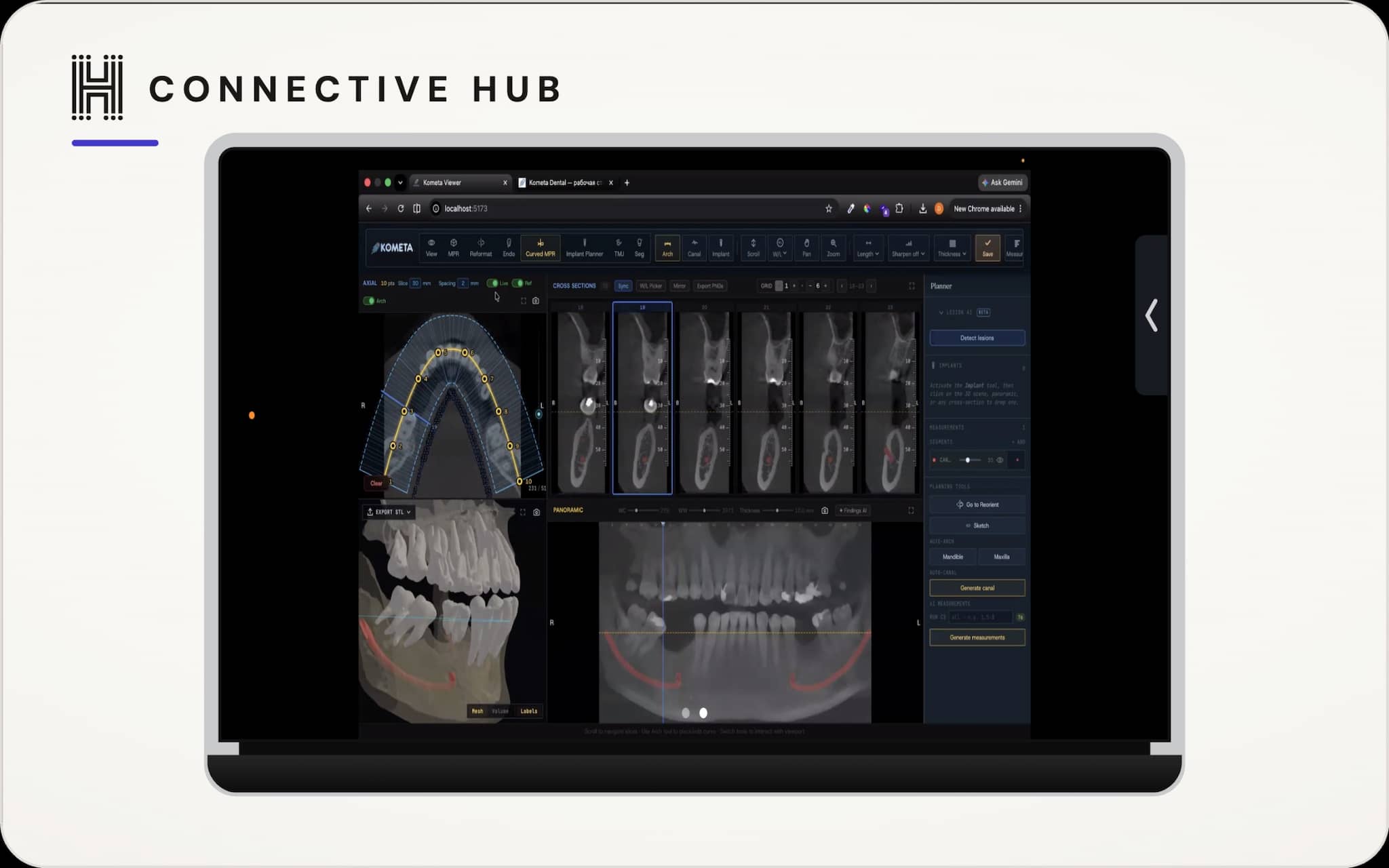
Part of the GalaxyMed line: the AI-analytics layer for dentistry that turns a raw scan into structure a clinician can act on — automatic segmentation and cephalometric landmark detection, running right inside the imaging workstation.
Challenge
Clinicians don't want another disconnected AI tool; they want the scan to arrive already understood — teeth, mandible and airway separated, key landmarks found — without the interface stalling or, worse, quietly getting something wrong.
Approach
We built the analytics to run inside the viewer: automatic segmentation of teeth, mandible and airway, and cephalometric landmark detection, surfaced where the clinician already works. The discipline is less about the model and more about running it so results are fast, legible and never presented with false confidence.
The scan should arrive already understood
The goal isn't "AI in the product" — it's that a clinician opens a case and the structure is already there: teeth, mandible and airway separated, cephalometric landmarks found. The work sits inside the GalaxyMed workstation, so the analysis meets the clinician where they already are.
The hard part isn't only training models; it's running them so results are fast, legible, and never presented with false confidence. In dentistry, an AI answer that's confidently wrong is worse than no answer at all.
The discipline
Not model accuracy alone — presenting AI structure so it assists the clinician without ever misleading them.
Before / After
Before
Manual from scratch
After
Structure already there
Reading a scan
Before
Separate app
After
Inside the workstation
AI tooling
The Impact
Quantitative
Qualitative
AI structure that assists without slowing the interface.
Runs inside the imaging workstation, not as a separate tool.
Team
Stack